
Services

The Crops We Work With
Our main expertise lies in studying row crops such as maize, soybean, wheat and barley as well as tomato.
Next to those, our team has experience with the setup and execution of research trials on crops such as beet, bean, carrot, capsicum, cucumber, curcuma, green herbs, ginger, leek, lettuce, melon, micro greens, onion, pumpkin, spinach, radish, rice, tomato and zucchini.
We are always interested in new crops, feel free to reach out!
IPSA Pipeline
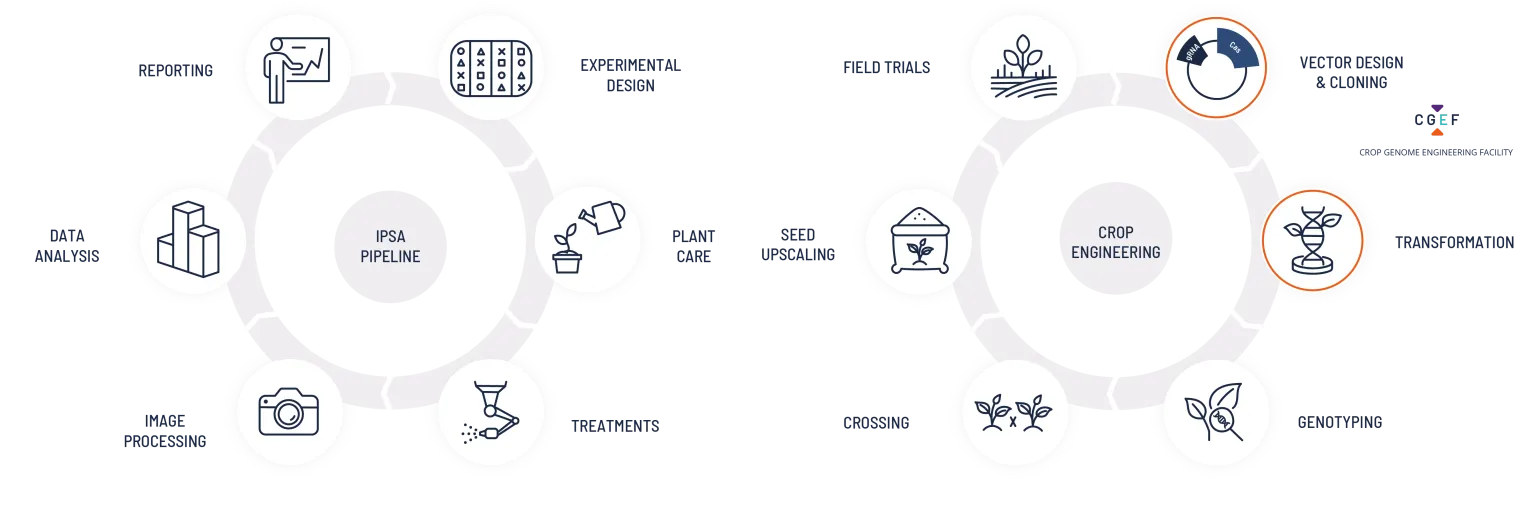
The Integrated Phenotyping for Sustainable Agriculture (IPSA) platform integrates high-throughput automated phenotyping with automation and data analysis tools for plant breeding and crop improvement. The IPSA pipeline aims to accelerate plant breeding efforts by facilitating efficient and precise plant phenotyping, allowing for a more targeted and data-driven approach to develop improved crop varieties.
Automation and Robotics
Automation and Robotics
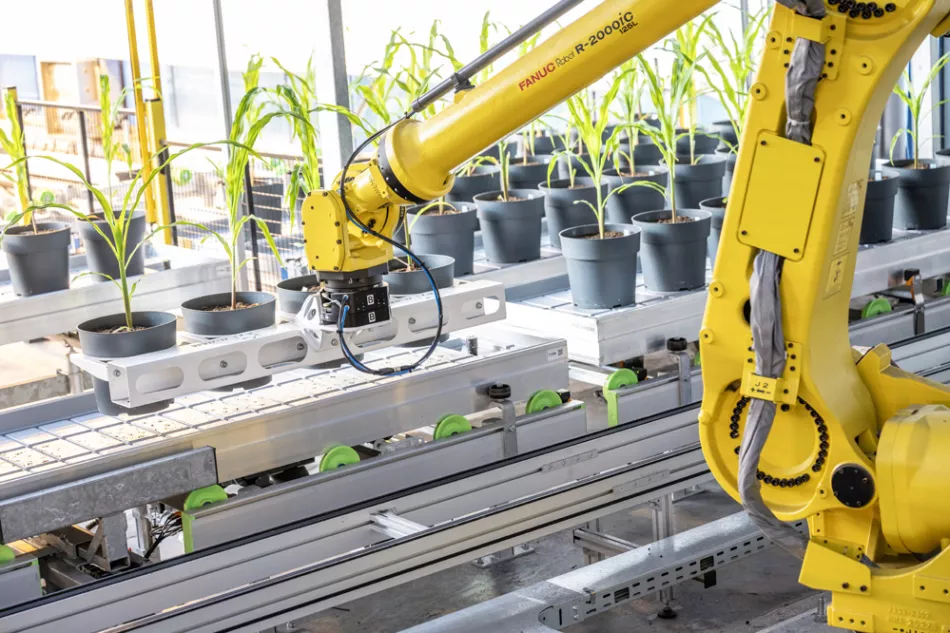
The IPSA (Integrated Phenotyping for Sustainable Agriculture) platform consists of an automated mobile table system based on clapper track movements and pusher actions that sends the individual growth tables to the robotic transfer station. With a gripper system, the robotic arm can pick up 4 pots simultaneously, depending on the pot size and associated gripper, and transfer them to individual pot carriers on the image loop. These carriers are moved to an RFID (radio frequency identification) reader for plant identification, after which the plants can enter the imaging cabinet, containing hyperspectral, RGB and multispectral camera systems. The imaging loop also contains a weighing and watering station. After imaging, the robotic arm puts the plants back on the table, which is then moved back to its original position in the greenhouse via a motorised roller track. The table system will carry 6x40 rolling tables providing space to 16320 0.8L pots or 5760 3.25L pots or 3840 10L pots.
Plant Imaging
Plant Imaging
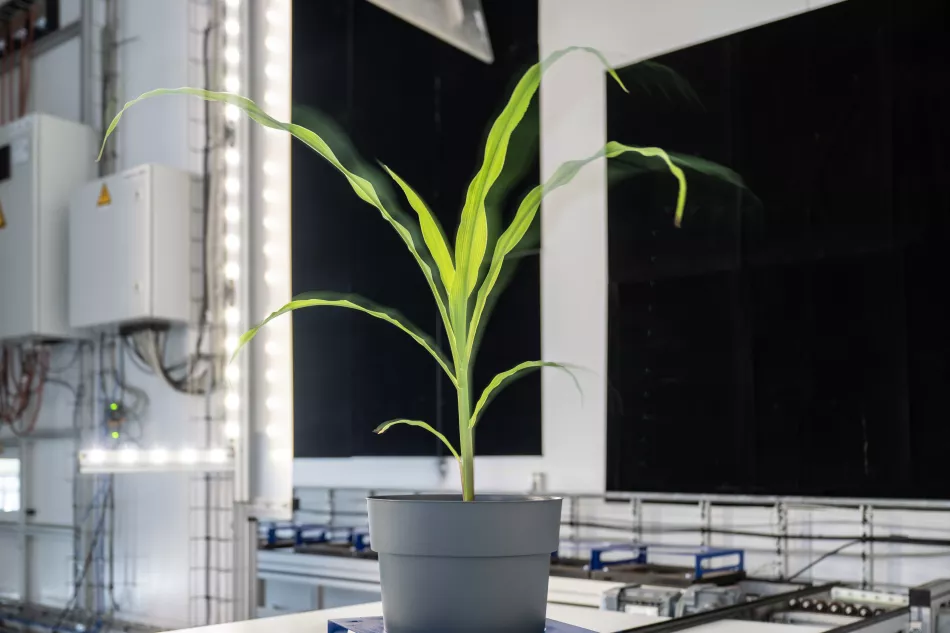
We keep on open eye on sensor innovations and are keen to test new technologies. Our team has full control on the triggering of the camera systems and the acquisition of the images in the automated phenotyping installation, takes care of both plant and sensor metadata communication and storage by in-house developed software tools.
In the current setup, the imaging cabinet contains following camera systems:
- One RGB camera (Allied Vision Prosilica GT4905C with GigE interface) is used to image the front of the plant as it rotates. Multiple pictures are taken with a predefined axial rotation of the plant between each image. A second, identical RGB camera is used to image the roots provided that transparent pots are used.
- A three band (red , visible and infrared) multispectral camera (FluxData FD-1665 3CCD, with GigE interface) is positioned above and acquires three simultaneous images per plant. Light (red, white and infrared) is controlled with a Gardasoft PP1620 LED driver.
- The hyperspectral imaging system consists of a visible to near-infrared line scan camera (Specim VNIR-PFD-65-V10E, 400-900nm, spectral resolution 3nm, Cameralink interface) and a short-wave infrared line scan camera (Specim SWIR-CL-400-N25E, 900-1700 nm, spectral resolution 3nm, Cameralink interface).
Root Imaging
Root Imaging
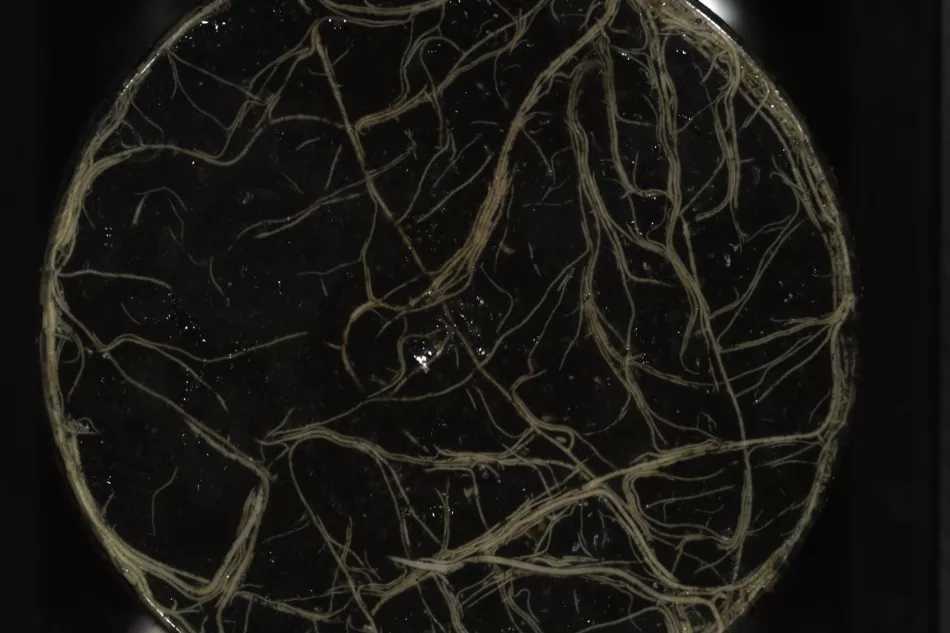
For plants growing in small transparent pots (0.8L), root images can be taken over time with an RGB camera. Root length, root area, and root diameter can be deduced from the images. A trial can also include a manual assessment of root biomass by destructive harvest.
Custom Assays
Custom Assays
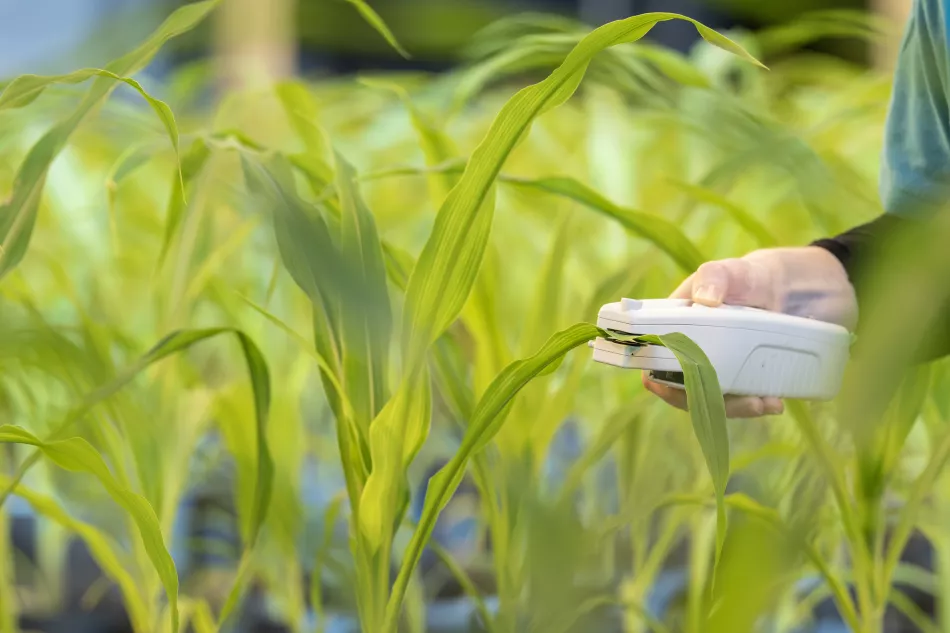
Each experiment can be fully customized with additional measurements of the plants with handheld devices such as PhotosynQ or determination of fresh and dry weight of the plants during various growth stages and yield-related traits, e.g. seed counts. The IPSA platform is embedded in an extensive network of partner facilities, which allows us to complement the automatic phenotyping with additional molecular characterization or contract research.
Treatments
Treatments
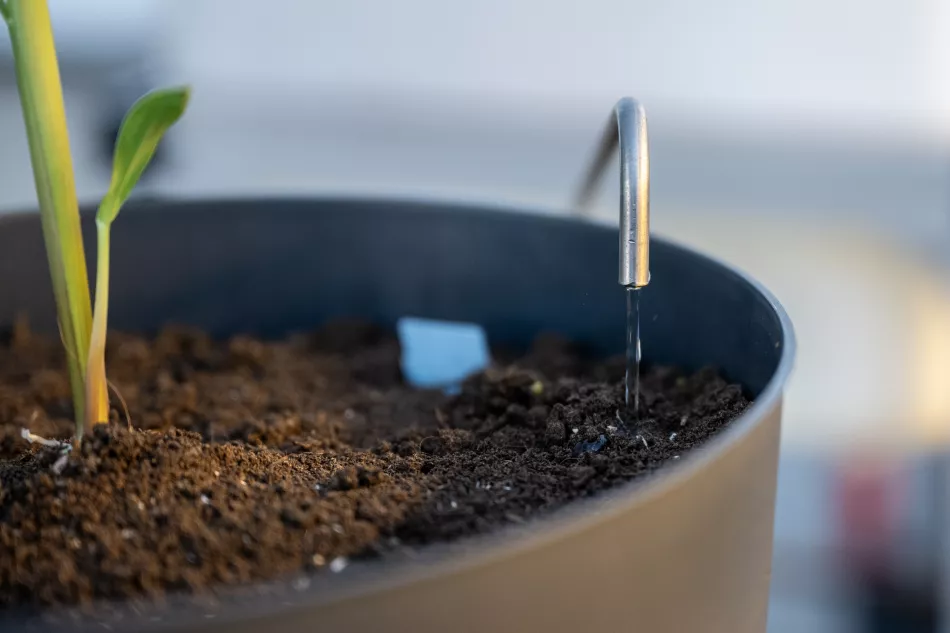
The IPSA platform can simulate drought conditions on the level of individual trays using the ebb and flow watering system or individual plants using the weighing and watering station connected to the imaging loop. Fertilizer and bio stimulant applications can be simulated by changing the potting mix or by differential fertigation. Foliar applications can be carried by our automated robotic sprayer.
Robotic Sprayer
Robotic Sprayer
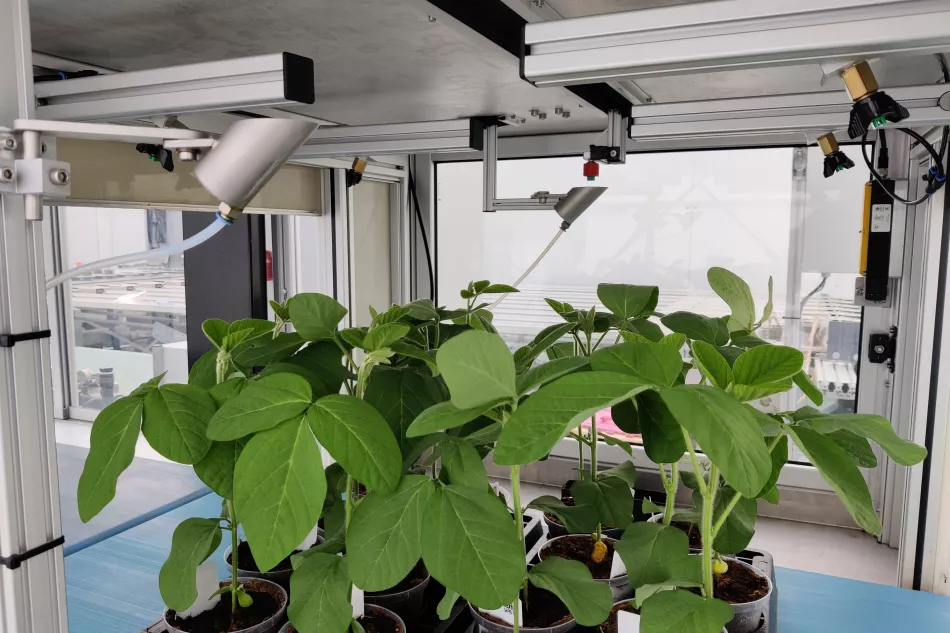
An automated robotic precision sprayer designed by Bosch Robotics allows the testing of the plant response (of small plants) to crop protection agents, biologicals, bio stimulants, and herbicides. An even flat spray nozzle ensures an even liquid distribution over the plants within a dose range of 100 to 500 l/ha. Upon spraying, the product, the concentration, and the application rate are automatically linked to the unique plant identifiers and saved in our database.
Data Management and Image Processing
Data Management and Image Processing
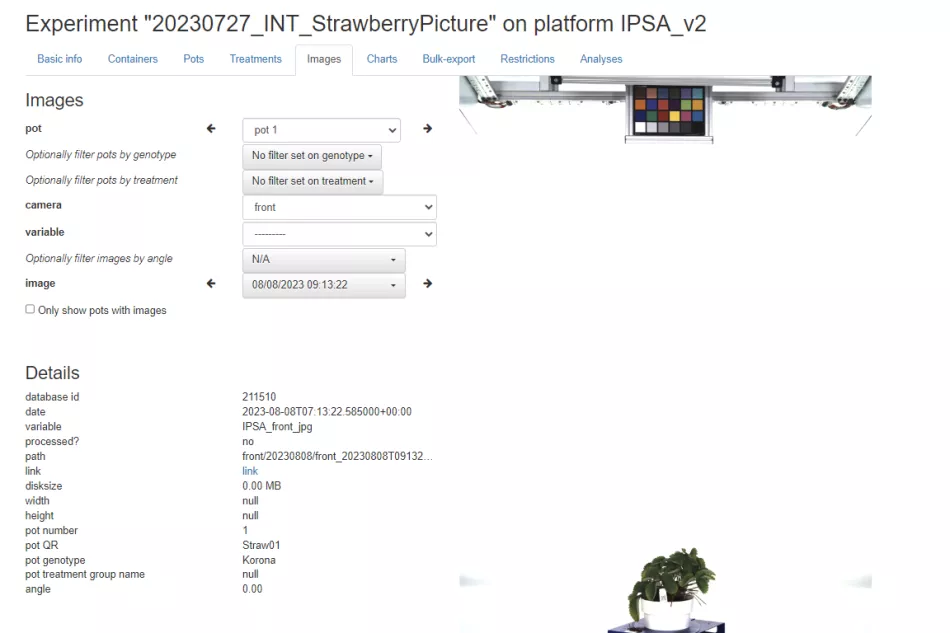
Agronomic parameters are extracted from the digital images using various computer vision techniques. The algorithms are initiated from the data management system IPPA (evolved from PIPPA), the Interface for Plant Phenotype Analysis, which functions as a central web interface and database that provides the tools for the management of different types of plant phenotyping robots and for the analysis and visualisation of images and data.
As part of our standard service, we provide help with the experimental set-up of the experiment and deliver the data through our central web interface and database PIPPA. In addition, descriptive statistics will be provided for following image derived key agronomic parameters:
- Plant area (from side and top view)
- Plant gravitational height (from the bottom to the center of gravity)
- Total plant height
- Plant width (from side and top view)
- Greenness and standard deviation of greenness (of all pixels of the plant)
- NDVI and standard deviation of NDVI ((of all pixels of the plant)
- Water index (derived from hyperspectral images)
- Anisometry (from side and top view)
- Bulkiness (from side and top view)
These summary statistics will be delivered through a web-based application.
Advanced statistical analyses are available upon request.
Data Analysis and Biostatistics
Data Analysis and Biostatistics
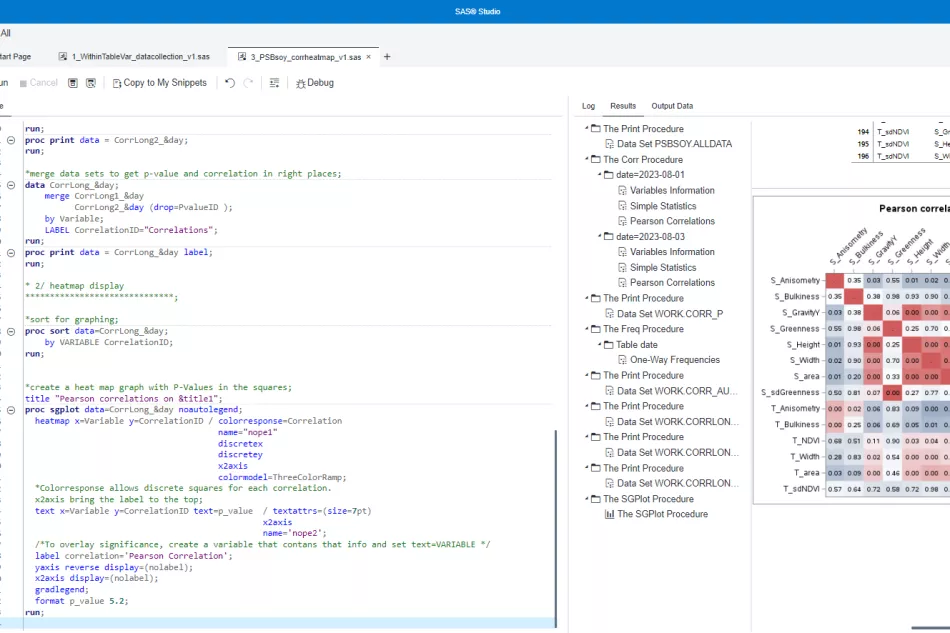
All experiments are carried out according to an appropriate experimental design to ensure that the research question can be answered. (Advanced) Statistical models are then used to test the hypotheses. The analyses are performed with SAS Analytics Pro.
Crop Engineering and Trait testing
In collaboration with the Crop Genome Engineering Facility of the VIB Center for Plant Systems Biology.
Vector Design, Cloning and Transformation
Vector Design, Cloning and Transformation

The Crop Genome Engineering Facility (CGEF) operates maize and soybean transformation platforms that can be accessed by both academic labs and industry. In addition, CGEF performs cutting-edge research to facilitate plant regeneration and to improve CRISPR delivery. CGEF can generate specific Knock-out events on demand, more advanced genome editing techniques can be explored in collaboration with the Thomas Jacobs lab.
Line Selection and Seed Services
Line Selection and Seed Services
Primary transformants are by default screened for presence of the selection marker. Any downstream line selection, selfing, backcrossing or seed upscaling can be performed on a project basis.
Excellence through Stewardship
Excellence through Stewardship
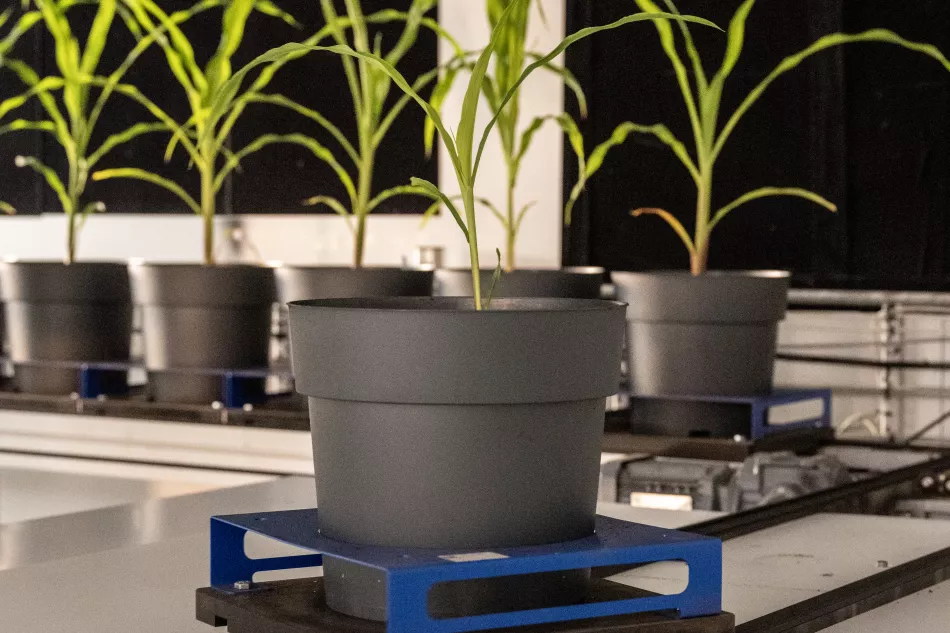
Our facilities are equipped to handle agricultural biotechnology products under development. We are committed to providing services of the highest possible standards and have appropriate quality management procedures in place to provide product stewardship (responsible management, handling, governance, oversight and traceability) throughout the trait development life cycle.
Field Trials
Field Trials
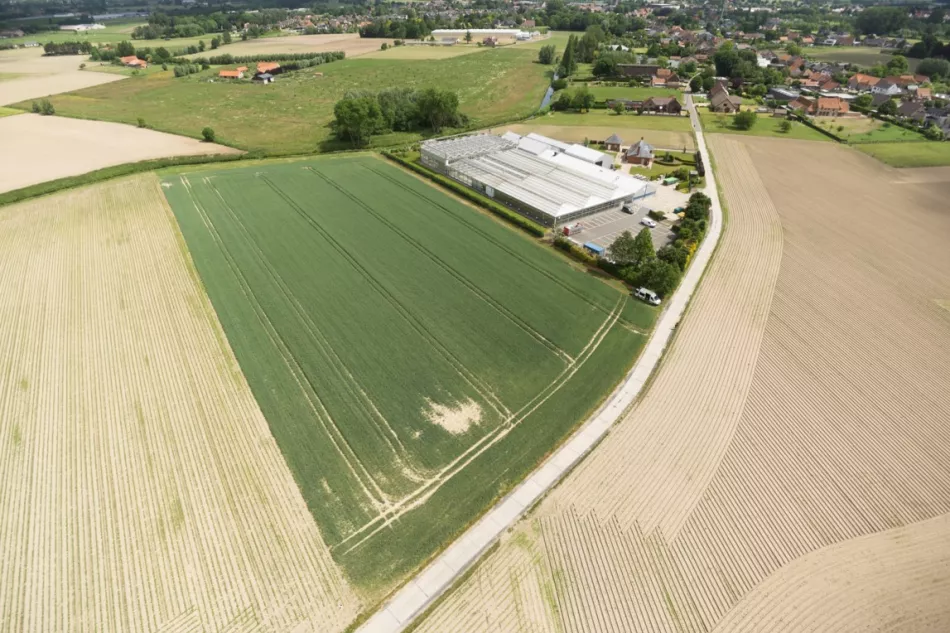
A 2ha field, managed in collaboration with our strategic partner ILVO, is available on site. The use of unmanned aerial vehicles (UAVs) provides additional information on the field plots.
Other Species
Other Species
Our plant experts do have broad expertise in many horticultural crops such as beet, bean, carrot, capsicum, cucumber, curcuma, green herbs, ginger, leek, lettuce, melon, micro greens, onion, pumpkin, spinach, radish, rice, tomato and zucchini. Other crops outside the scope are open for discussion.
Incubator Services
Together with our partner Biotope by VIB, we aim to accelerate the development of early stage AgriFood companies by providing a suite of incubator services.
Greenhouse Rental
Greenhouse Rental
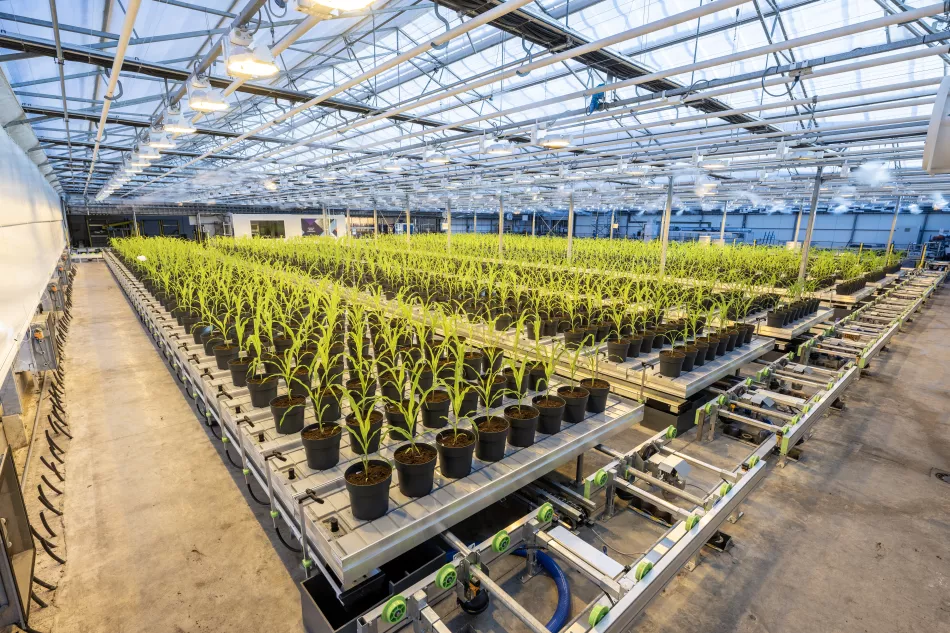
Access can be provided to an entire greenhouse compartment as well as to a specific number of tables/grids. General plant care, greenhouse control, pest monitoring and waste management are by default included.
Laboratory Space and Equipment
Laboratory Space and Equipment
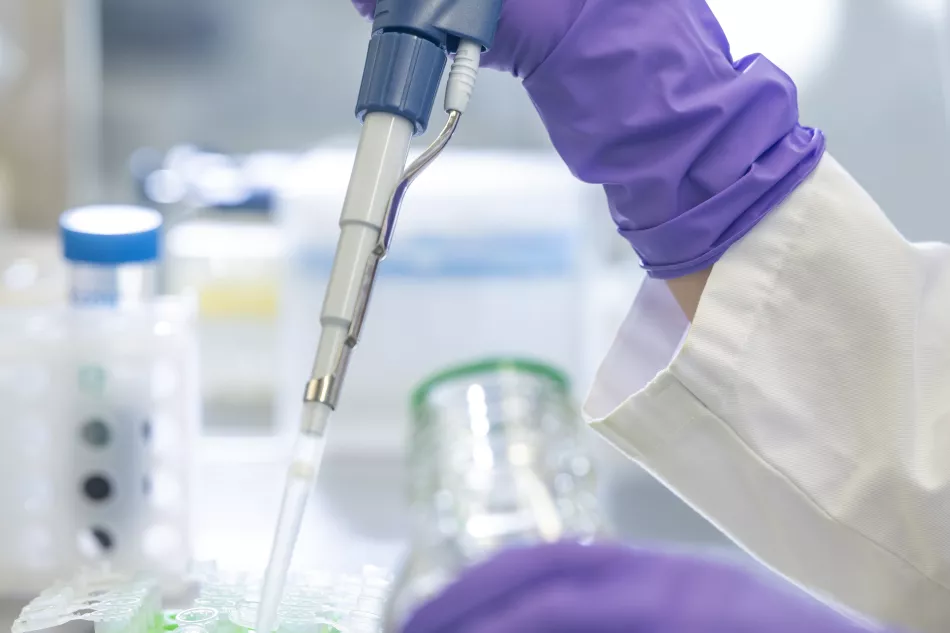
We have 150 square meter of laboratory space divided over four lab units. The laboratory space is open to researchers and scientists looking for a modern and well-equipped facility. The laboratory has standard molecular biology tools, including laminar air flows, microscopes, a chemical laboratory with a fume hood and a laboratory kitchen. The laboratory space is flexible and can be arranged to the researcher's needs.
Office Space
Office Space
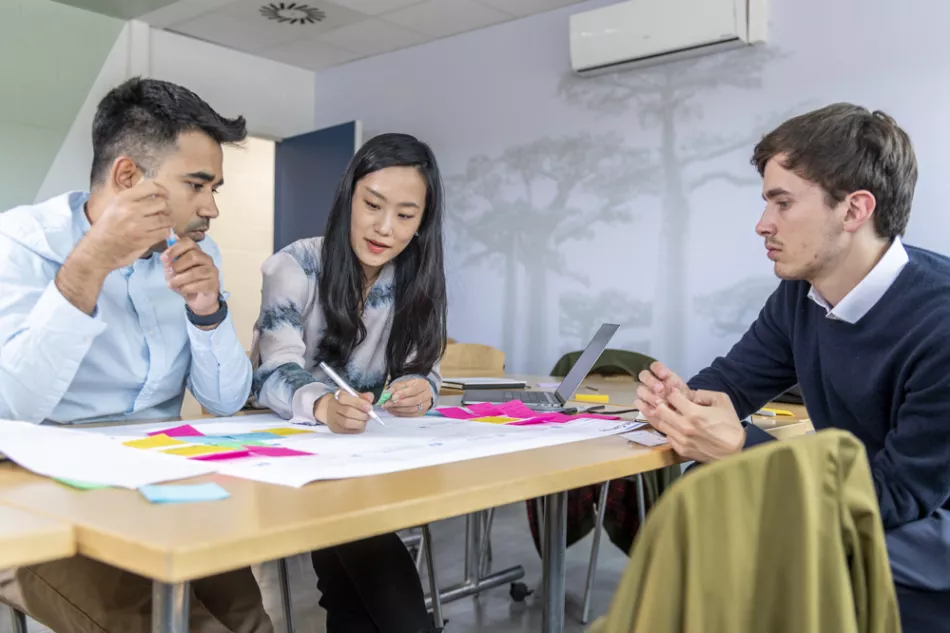
Together with VIB’s Biotope program, we provide accommodation and support to young entrepreneurs working on the future of sustainable agriculture and food production.